How to pick your semiconductor supply chain service provider
Cargo risk in the semiconductor supply chain and AI hardware logistics is no longer a simple “keep the trailer moving” problem. The loads are too valuable, the delivery windows too tight, and the threats change too fast for a provider that only offers transport execution or passive tracking. The best semiconductor supply chain service providers help teams keep control in motion through verified chain of custody, live risk detection, clear intervention, and supply chain optimization.
What are common semiconductor supply chain challenges?
Risk can take the form of a carrier swap no one notices. It can be a routine stop that turns into a long delay or a handoff that breaks the chain of custody. It can also be a pickup that looks right on paper, and then suddenly, the load is gone. Semiconductor industry and AI hardware supply chains make this problem worse because they combine high value with complex global handoffs across the entire global semiconductor network.
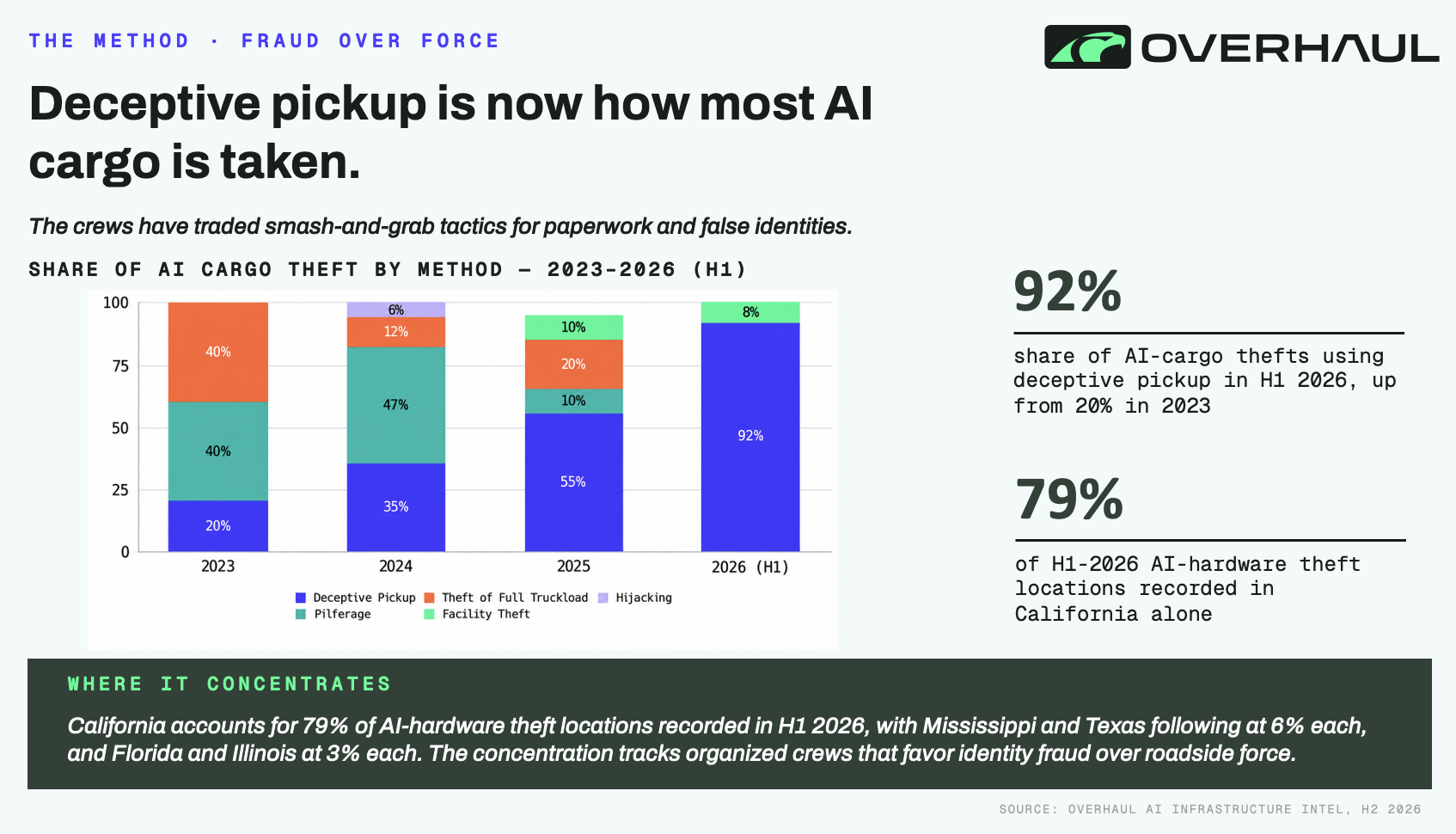
This combination of value and complexity has made these shipments a prime target for organized cargo crime gangs. These groups now actively target semiconductor and AI hardware loads using sophisticated tactics such as fraudulent pickups, carrier impersonation, and coordinated theft. As law enforcement and industry reports show, this is not a theoretical risk, but an escalating reality that amplifies the need for robust risk management and chain-of-custody controls.
A few common challenges include:
- High value, high theft appeal: Semiconductor chips, boards, and AI hardware are attractive targets, and loss can ripple into missed production and customer commitments, disrupting semiconductor manufacturing schedules.
- Fraud-forward threat tactics: Deceptive pickup schemes, carrier fraud, double brokering, and credential abuse—often orchestrated by organized crime groups—exploit gaps between what systems show and what is actually happening at pickup or handoff.
- Strict delivery windows: Late freight is not just late. It can disrupt fabrication facilities (fabs), line changeovers, and downstream builds.
- Complex handoffs and subcontracting: More parties mean more transfers, which create more chances for misrouting, dwell, and accountability gaps in semiconductor production facilities.
- Cross-border and compliance pressure: Recent U.S. legislation, such as the 2022 CHIPS and Science Act, has emphasized the importance of compliance and supply chain resilience for semiconductor companies operating domestically and globally.
This is why provider selection is not a procurement checkbox. It is an operating-model decision: who can see risk early enough to act, and who can prove what happened when something goes wrong in the semiconductor supply chain?
What should a semiconductor supply chain service provider actually do?
Traditional supply chain management often relies on delayed milestones, manual check-ins, and disconnected systems. For high-value semiconductors, that is not enough. A provider worth working with should deliver a coordinated stack of technology and operations built for sensitive freight in the semiconductor industry.
- End-to-end visibility with context: Visibility is more than a map. Providers should show where a load is compared with the planned route, stops, and handoffs so teams can decide fast. This is especially critical for chips design and manufacturing capacity allocation.
- Carrier and pickup verification: Controls should reduce impersonation and mismatch risk. This includes carrier identity checks and checks on expected pickup behavior, are vital for semiconductor companies.
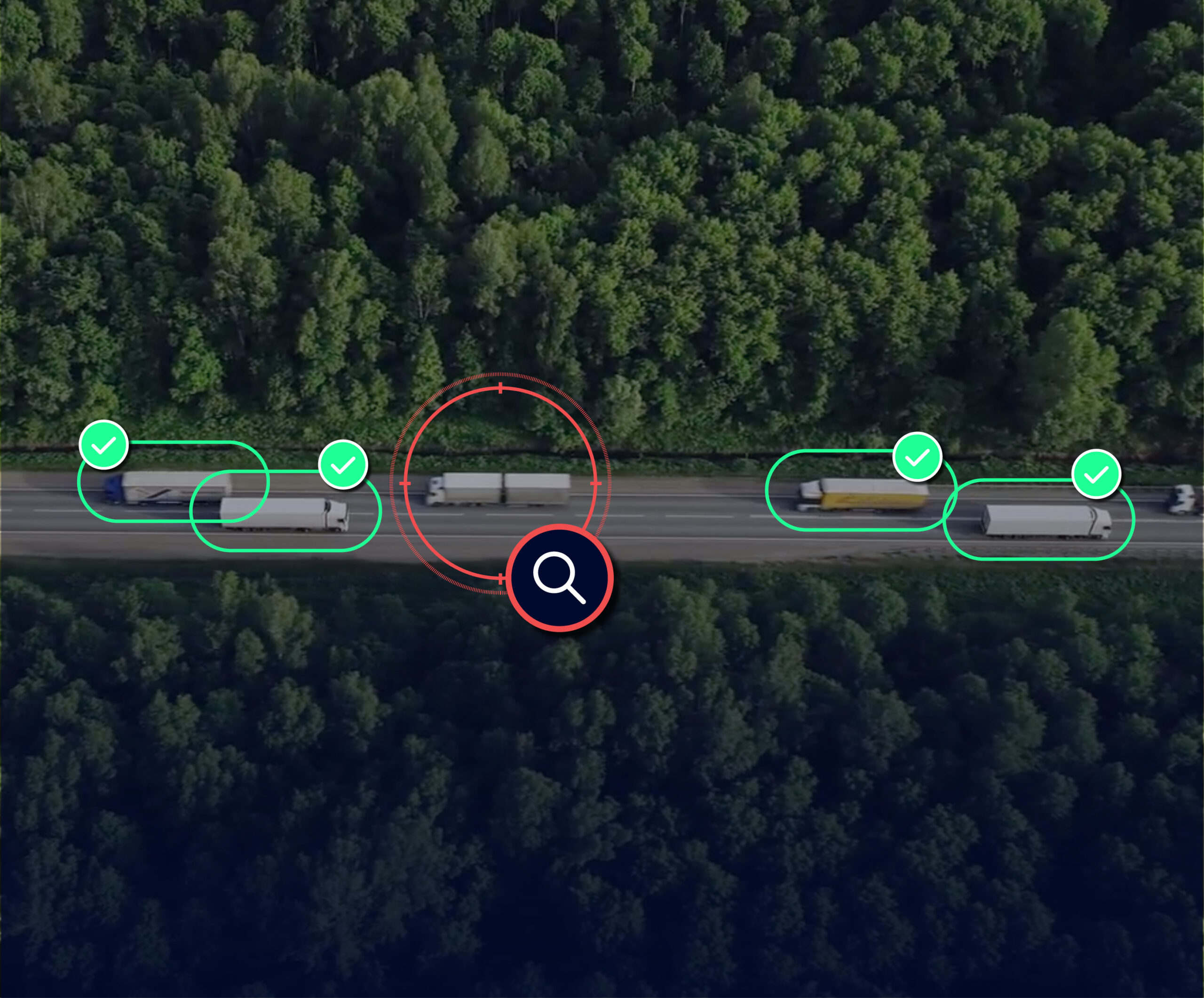
- Risk monitoring and scoring: Providers must provide early warning for route deviations, unexpected stops, long dwell, and suspicious lane behavior.
- In-transit security: A good service provide will offer active protection while freight is moving. This encompasses everything from high-risk legs to yards, border crossings, ports, and docks.
- Exception management with clear response: There should be clear escalation rules, the right people notified at the right time, and an intervention plan that works after business hours.
- Compliance and chain-of-custody support: The provider's ability to document handling, handoffs, and exceptions in a way that supports audits, customer rules, and internal governance is key.
- Data-driven supply chain optimization: Providers must turn shipment history into changes you can use. Some examples are lane controls, carrier requirements, routing rules, dwell-point fixes, and better monitoring coverage.
The real value is control, not just tracking
A tracking pin only tells you where cargo or assets are located. It does not tell you whether the pickup was real, whether the carrier is the carrier you booked, or whether the driver credentials match what was expected. That gap—visibility without verification—is where modern fraud thrives.
In the semiconductor supply chain, where intellectual property and sensitive chips design are at stake, the problem once again compounds.
Control means linking live shipment signals to accountability and action. If a load drifts off-route, stops where it should not, changes carriers suddenly, or behaves differently than planned, the provider should help the team judge severity and trigger intervention while there is still time to mitigate risks and protect manufacturing capacity.
In-transit security has to include prevention and response
In-transit security only matters when it is tied to a response model. Alerts without intervention are just noise. The provider should be able to explain, in plain language, what happens at 2 a.m. when a high-value shipment makes an unauthorized stop or a pickup does not match verified expectations. This is especially critical for semiconductor manufacturing and production facilities.
Providers should also be clear about who gets contacted, what evidence is collected, how severity is judged, and how the issue is resolved. For global semiconductor logistics, rapid response can make the difference between a routine delivery and a disruption that impacts fab schedules in the United States, South Korea, or other major semiconductor hubs.
Why can't companies just manage these services themselves?
Most semiconductor companies can manage pieces of the process in-house. However, few can match a specialist provider's mix of technology, 24/7 monitoring, carrier intelligence, and response coordination at scale. Internal teams are built to design, source, make, and ship, not to run a round-the-clock risk operation across every lane, carrier, and handoff.
Even strong internal programs tend to break down in the seams:
- Fragmented systems: Transportation, warehouses, security, and customer teams work in different tools with different ideas of what is urgent.
- Continuous monitoring is hard to staff: High-value freight moves at night, on weekends, and on holidays. Coverage gaps are where incidents grow, especially for semiconductor chips moving between fabrication facilities.
- Response requires a network: Effective intervention can involve the shipper, carrier, driver, consignee, security partners, and sometimes law enforcement. This is coordination you do not want to invent during a live event.
- Optimization requires cross-shipment learning: The best recommendations come from patterns across lanes, dwell points, carriers, and incident outcomes, not a few internal stories.
A practical evaluation checklist
When you compare semiconductor supply chain service providers, ask questions that force clear answers under real conditions:
- Verification: How do you reduce deceptive pickup, double brokering, and carrier fraud before a load leaves the yard? (Organized crime groups are increasingly targeting semiconductor shipments with these tactics.)
- Real-time monitoring: What signals do you watch, such as route deviation, unauthorized stops, dwell, or carrier mismatch, and what thresholds trigger escalation?
- Response model: Who steps in, how fast, and what does intervention mean in practice for the shipper, carrier, driver, facility, security, and law enforcement?
- Chain of custody: How do you document handoffs, exceptions, and corrective actions for customer rules and audits? What safeguards are in place to ensure an unbroken chain of custody?
- Coverage reality: Can you monitor the modes and regions we actually use, including cross-border and multimodal moves such as truck, air, ocean, and rail?
- Signal-to-noise: How do you prevent alert fatigue and make sure internal teams get useful intelligence instead of another inbox?
- Optimization output: Show examples of changes you recommended, such as lane controls, routing rules, or carrier requirements, and the results those changes delivered.
The best providers can walk through scenarios end to end, such as a suspicious pickup, an unauthorized stop, a route deviation near a high-risk zone, or a missed handoff window. They can then explain exactly how the system and the team respond, ensuring that supply chain resilience is maintained.
What separates a top provider from an average provider?
Average providers deliver a narrow slice: tracking without verification, analytics without intervention, or transportation execution without risk intelligence. A top provider delivers an integrated operating layer that connects shipment signals to prevention, response, documentation, and continuous improvement.
The difference shows up when the shipment is under pressure. During exceptions, vague milestone updates are far less valuable than verified chain of custody, risk context, and coordinated response. This is especially true for shipments of raw materials and finished semiconductor chips destined for fabrication facilities, where a delay can cascade through production.
Why Overhaul is among the best semiconductor supply chain service providers
Overhaul is among the best providers for organizations that need stronger control over high-value and sensitive supply chains. Our approach matches what semiconductor and AI hardware shippers actually need: end-to-end visibility paired with proactive risk management, in-transit security, and exception response so teams can act while outcomes are still changeable.
Our solutions focus on the gap where many internal programs and basic visibility tools are weakest. Specifically, we oversee what happens after freight leaves a controlled facility and before it arrives safely at the next node. That is the window where route behavior, dwell, pickup integrity, and handoffs decide whether you have a routine delivery or a costly incident.
Overhaul also reduces the need for a patchwork of tools and manual escalation. Instead of tracking in one system, vetting in another, and scrambling for response in a third, teams can work with a provider designed to connect monitoring, verification, and intervention in one operating motion, strengthening supply chain resilience for semiconductor production.
A few of our specific tools include:
AI-backed RiskGPT
One of the biggest shifts in supply chain management is the use of artificial intelligence-driven tools. Overhaul's AI-backed RiskGPT is designed to give teams proactive risk analysis by using live data to forecast possible disruptions. This smart tool checks many factors, including transportation routes and past incident data, to spot weak spots before they affect the supply chain. With these predictive insights, logistics teams can make better decisions and take preventive steps that protect high-value semiconductor shipments, whether they involve raw materials, chips, or finished AI hardware.
FraudWatch carrier verification tool
Security is a major concern in semiconductor logistics, where theft and fraud risk is high. Overhaul addresses this challenge with our FraudWatch carrier verification tool, which helps protect the supply chain by making sure carriers meet strict verification standards. The tool checks carrier credentials against a large database and adds another layer of security against deceptive practices such as carrier fraud and double brokering. By verifying carriers before shipments leave the yard, companies can reduce fraud risk and keep chain of custody intact throughout transport.
Asset Manager for resource optimization
In addition to risk checks and security, strong asset management is key to supply chain efficiency. Overhaul's Asset Manager gives teams a way to track and optimize resources in real time. The tool helps logistics teams monitor the status and location of high-value shipments so assets stay in use and are always accounted for. With visibility across the supply chain, Asset Manager helps teams cut delays, reduce dwell times, and improve operations at production facilities and fabrication facilities.
The right provider should be part of your operating model
The semiconductor supply chain is too valuable and too complex to manage with fragmented visibility and reactive escalation. A strong provider gives companies the tools, intelligence, and response structure needed to protect goods in motion while improving supply chain performance over time.
Overhaul is among the best semiconductor supply chain service providers. But you don't need to take our word for it. Take a look at what our customers have to say, and learn more about Overhaul's AI hardware solutions.