What is the CHIPS and Science Act (and why does it matter)?

Four years ago, rebuilding the U.S. semiconductor industry was a hope. Today, it is reality. The CHIPS and Science Act, signed into law in 2022 as a response to global shocks, has moved from policy talk to practical impact.
With over $39 billion in CHIPS Act funding for semiconductor manufacturing facilities (part of a broader $52 billion package including research and workforce development), the national conversation now centers on risk, resilience, and the future of technology innovation.
What is the CHIPS and Science Act of 2022?
The CHIPS and Science Act is a U.S. law designed to strengthen domestic semiconductor manufacturing, research, and supply chains. As part of this law, the CHIPS for America Fund, administered by the Department of Commerce, has enabled dozens of large-scale private sector investments, bringing new fabs online and revitalizing research and development ecosystems in states like Texas, Arizona, New York, and Ohio. These investments have been paired with targeted tax credits, making the United States a prime destination for both advanced and mature-node semiconductor production.
Semiconductor companies can now plan ahead. Shorter supply lines and supplier groups have cut lead times and lowered the risk of global disruptions. Domestic chip making is now a key part of industries like artificial intelligence and clean energy.
Resilience and risk: what’s different now?
The CHIPS and Science Act of 2022 was not just about making more chips. It was also about national security and resilience. In the early 2020s, chip shortages showed just how much the U.S. depended on foreign production. By 2026, with strong investments, the U.S. has more options and flexibility in its critical infrastructure.
Practical impacts seen in 2026
- Shorter, regional supply lines: Chip factories now supply automakers, defense contractors, AI startups, and clean energy firms directly. This reduces risk and inventory swings.
- Supplier clustering: New factory parks bring in materials, packaging, and equipment suppliers, improving reliability.
- Workforce and research surge: The Act supports workforce training and research, growing the talent pool and speeding up innovation.
- Security and traceability: Companies use strict tracking and standards, matching logistics with national security needs.
How have incentives translated into factories, suppliers, and jobs?
The CHIPS for America Fund has catalyzed private sector investments across the semiconductor industry, from advanced logic and memory to mature-node chips needed for automotive, industrial, and defense systems.
Companies now consider the entire semiconductor supply chain when making decisions. Procurement and supply chain teams map out which suppliers are expanding domestically, how investments impact lead times, and where fallback options exist.
How the Act affects companies today in 2026
With new chip factories in operation, companies now plan for risk instead of reacting to crises. Industries like AI, automotive, and clean energy benefit from earlier supplier qualification, careful ramp planning, and stronger domestic partnerships.
Supplier qualification and ramp planning: U.S.-based suppliers are now part of the standard process. This helps avoid last-minute bottlenecks. Ramp plans are based on real timelines, including equipment installation, workforce readiness, and strict quality standards. This gives companies more confidence in supply for AI hardware, clean energy, and other important sectors.
Policy requirements and compliance: The Department of Commerce oversees reporting and compliance for CHIPS Act funding. Companies that receive support from the CHIPS for America Fund must follow strict security, sourcing, and transparency rules. This helps protect national security and boosts technology innovation in the U.S.
Utilities, labor, and logistics: New chip factories need plenty of power, water, and skilled workers. These are now top concerns for choosing factory sites and managing risk. As more valuable shipments move within the U.S., logistics and in-transit security have become important for company leaders. The value of goods in the chip supply chain is rising, making safe transport critical.
Tax credits and private investments: The CHIPS and Science Act has led to record levels of private investment, thanks to federal tax credits. These incentives speed up new factory building and encourage innovation in related fields, such as packaging, photonics, and materials.
Ongoing risks and lessons learned
Before the CHIPS and Science Act, U.S. supply chains focused on lean inventories and global sourcing. In 2026, companies build resilience from the start. They group chips by importance, map production sites, and invest in extra capacity when needed for risk and security.
However, while the CHIPS and Science Act has made the U.S. stronger in the global chip supply chain, risks still exist. New factories take years to reach full production. Approving new suppliers and technologies is also complex and slow. Making chips in the U.S. adds resilience, but costs may not always be lower. There are still shortages of skilled workers, especially engineers and technicians.
Policy and market uncertainty remain. The chip industry is sensitive to global trade, export controls, and changing security needs. Chip strategy is now a permanent priority for company leaders.
How Overhaul supports high-value shipments in 2026
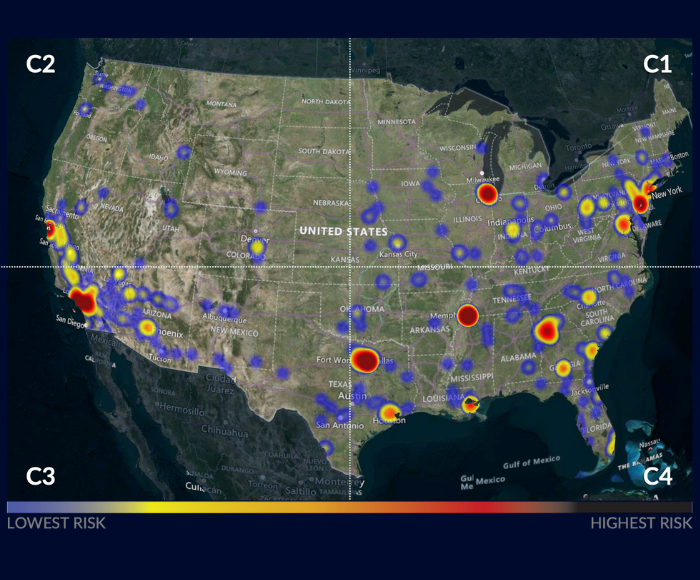
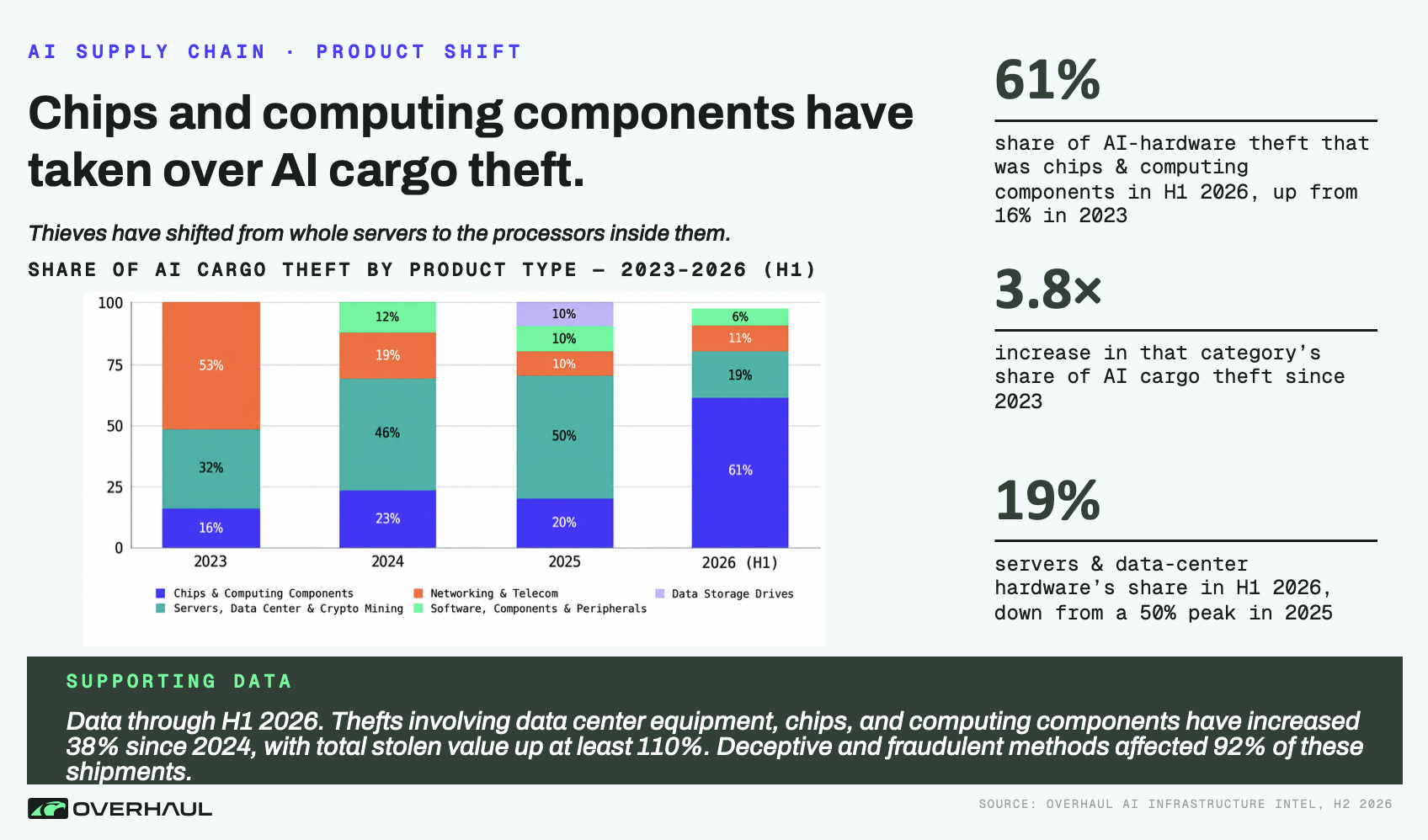
Cargo crime remains a persistent risk, especially in well-known US hot spots. According to Overhaul’s Cargo Theft Heat Maps, regions such as Los Angeles, Dallas/Fort Worth, Atlanta, Chicago, Memphis, Houston, and New Jersey/New York consistently see elevated cargo theft activity. Semiconductor and AI hardware shipments are frequent targets, underscoring the need for robust supply chain security.
As the U.S. chip industry grows, Overhaul’s platform helps protect valuable shipments. This includes AI chips, clean energy components, and advanced logic chips moving between factories, packaging sites, and integrators. Overhaul offers real-time shipment tracking, risk-based monitoring, carrier checks, and escalation protocols. These tools help companies protect revenue and meet higher security standards set by the CHIPS and Science Act.
To further address these risks, Overhaul participates in The Helix Consortium, a collaboration with Navium Insurance and other partners. This collaborative approach not only mitigates financial loss but also enhances operational resilience, ensuring critical technology shipments reach their destinations safely.
The CHIPS and Science Act has reshaped the U.S. chip industry. Investments in incentives, tax credits, and research have powered new technology and improved national security. For operations and supply chain leaders, the message is clear: map risks, build flexibility, and keep up with new standards and opportunities.
Organizations that make resilience part of their daily operations, not just a crisis response, will thrive in the new era of chips and science.
Learn more about how Overhaul can help your AI hardware company thrive.