Ensuring AI data security: the missing in-transit piece
Most AI data security guidance starts in the same place: lock down datasets, harden the model, add policies, audit continuously. All of that matters. But there is a gap I see teams walk into over and over.
They protect the data. They protect the systems. Then they forget that the systems have to get there.
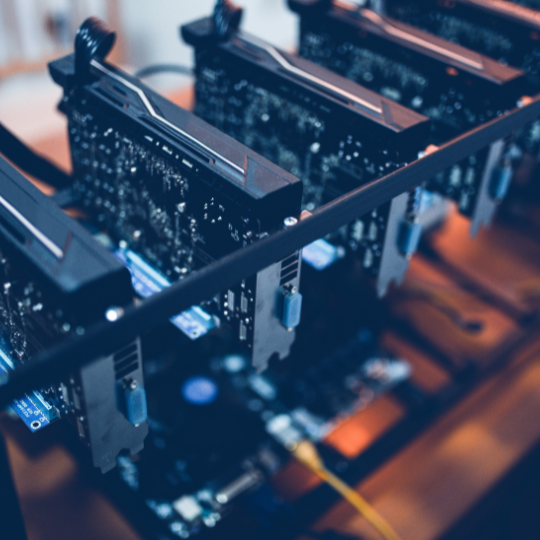
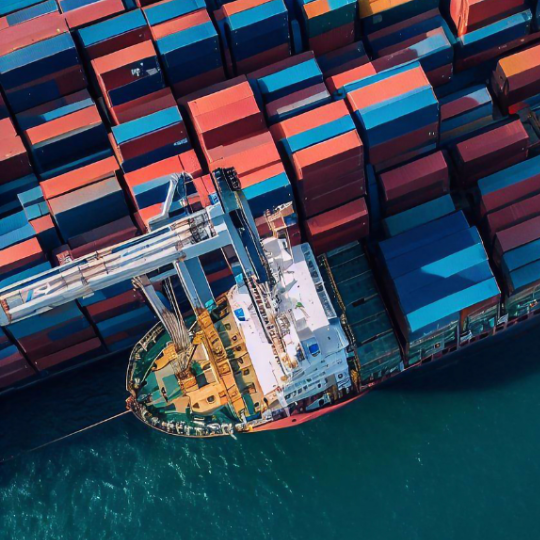
AI runs on high-value hardware—GPU servers, accelerators, edge devices—and that hardware moves through the same logistics network as everything else. If it is damaged, stolen, or swapped in transit, you do not just have a supply chain incident. You may have a data security incident, too.
AI data security: an overview
A handful of AI security risks show up again and again. Fortunately, you do not need a 40-page policy to start reducing exposure. Instead, you need clarity on where AI actually breaks.
Unique AI risks
Traditional security assumes you can put controls around a system and keep threats out. AI does not behave like that. Training data, model weights, prompts, logs, retrieval indexes, and outputs can each become a path for leakage or manipulation.
That shows up in practical ways:
- Data poisoning: corrupt inputs in training or fine-tuning can steer behavior without tripping conventional alerts.
- Model inversion and membership inference: attackers probe for whether specific records were in the training set, or try to reconstruct sensitive patterns.
- Model and embedding theft: a compromised API key, misconfigured storage bucket, or over-permissive inference endpoint can expose expensive IP.
- RAG and vector database exposure: teams add a retrieval layer to make an LLM “smarter,” then forget they just created a new database of internal knowledge that needs the same controls as any other sensitive repository.
The common failure mode is treating the model as a feature and the data as a dependency. In AI, the data is the product, and the model is one of the places it can leak.
Generative AI creates real-time leakage paths
Public bots, unmanaged tools, and unsecured internal interfaces turn everyday workflows into data exposure
This is where data loss prevention (DLP) and guardrails matter: not because they look good in a control checklist, but because they reduce the chance that proprietary code, customer data, or internal plans get pasted into the wrong place and retained by the wrong system.
Two patterns are worth calling out:
- Shadow AI: Employees use whatever tool is fast. If you do not provide an approved option, they will create one. That makes policy enforcement a product problem, not just a compliance problem.
- Prompt injection and tool abuse: Attackers do not always “hack” the model; they manipulate it. If your chatbot can call tools, pull documents, or execute workflows, then an adversarial prompt can become a data-exfiltration workflow if you do not enforce permissions at every hop.
Practical security controls include input/output filtering, strict system prompts, tool permissioning, and continuous testing with adversarial prompts. But the simplest rule still holds: do not let the model see what you cannot afford to have repeated.
Deployment choices change your risk profile
Most AI teams end up mixing external APIs, internal services, and third-party SaaS tooling. That is not inherently bad, but it is where controls get inconsistent.
- External (cloud/API): You gain speed, but you inherit vendor retention policies, logging practices, and contractual gaps unless you negotiate them explicitly.
- Internal (on-premises): You gain data sovereignty, but you also own patching, key management, isolation, and the operational discipline to keep the environment hardened.
- Hybrid reality: The most common failure is thinking you are “on-prem” while your embeddings, logs, or monitoring data are flowing to third parties by default.
Security teams should map the full data path: inputs, intermediate artifacts, outputs, and logs. In AI, “logs” can contain the most sensitive text your organization produces, creating new attack vectors and potential for data breaches if not properly managed.
The missing in-transit piece
AI security teams tend to start at the model layer, then work backward. That is understandable. It is also where a lot of plans quietly break, because the highest-value assets in the AI stack are often the easiest to monetize in the physical world.
AI hardware is high-value electronics, and moving it is not a routine parcel event, but rather, a high-consequence shipment. In-transit damage (shock, vibration, temperature exposure, rough handling) can take critical nodes offline. Theft and tampering can be worse: if hardware is stolen or swapped, you may lose equipment, configuration artifacts, credentials, logs, and access paths that were never meant to leave controlled environments.
And the threat is not always a smash-and-grab. Cargo theft has shifted toward fraud, including deceptive pickup schemes built on forged credentials and carrier impersonation. A tracking pin on a map will tell you where a trailer is after it leaves. It will not tell you the wrong party picked it up in the first place.
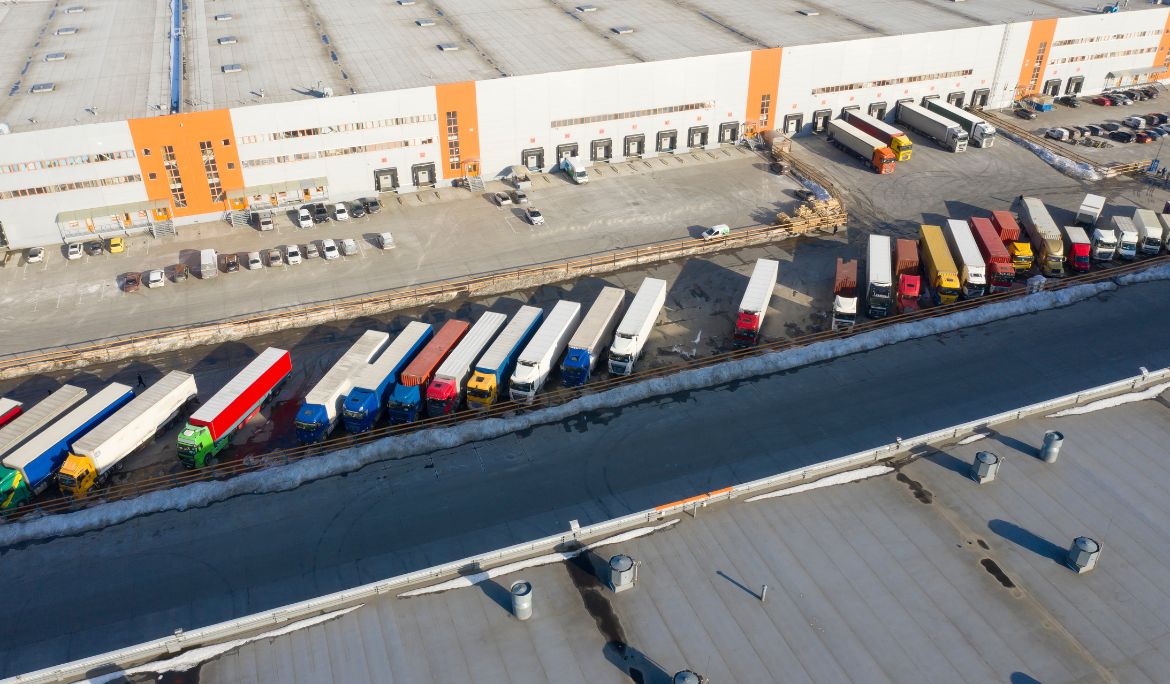
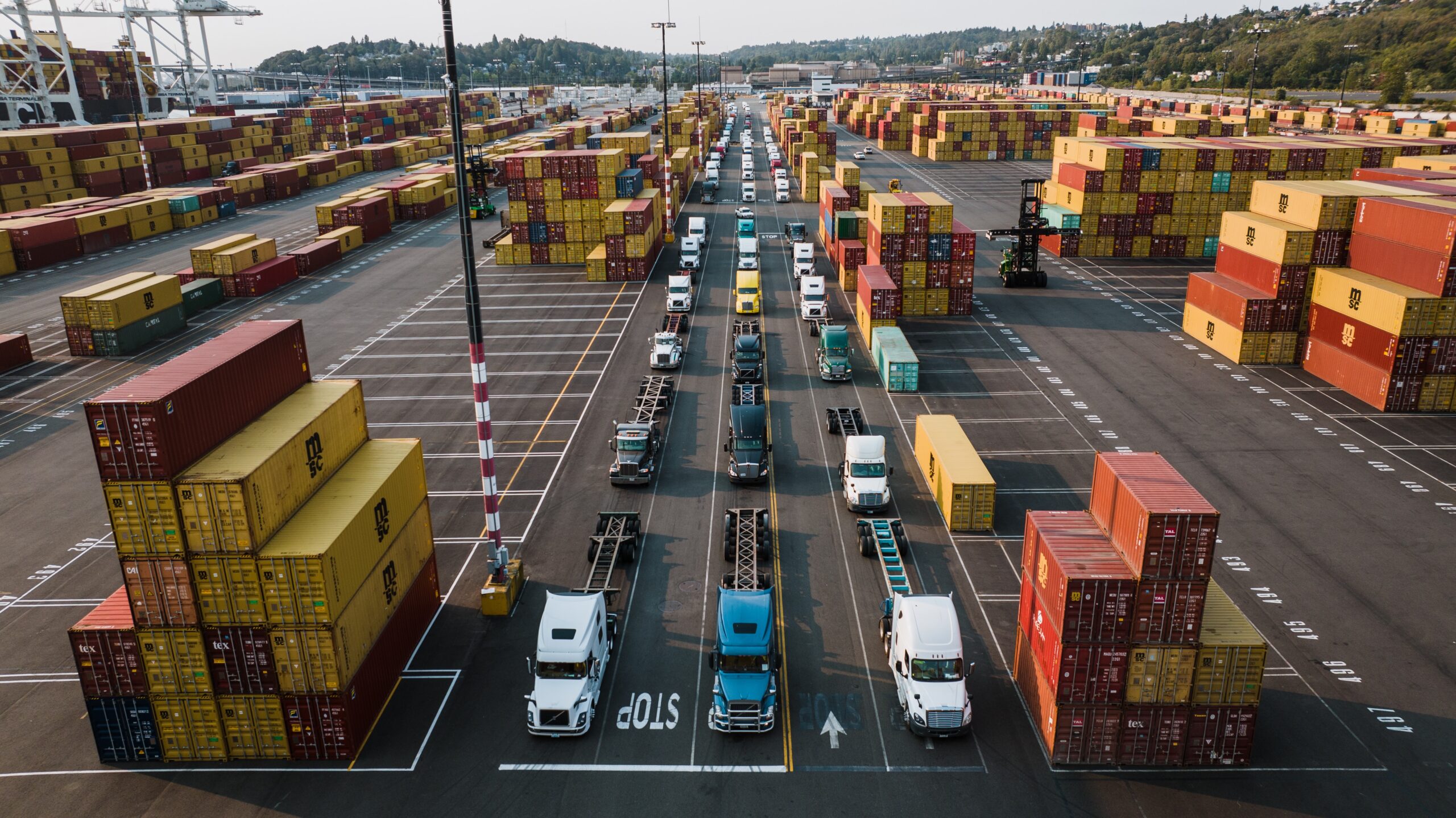
If you want a simple way to think about it: the in-transit leg is the moment your “secure environment” becomes a distributed network of yards, docks, carriers, drivers, and handoffs. That is not an IT problem, but it can become one quickly, especially as attack surfaces expand and adversarial attacks become more sophisticated.
The practical takeaway is simple: if your AI roadmap depends on moving high-value compute through a complex logistics network, treat in-transit protection as part of your AI data security posture.
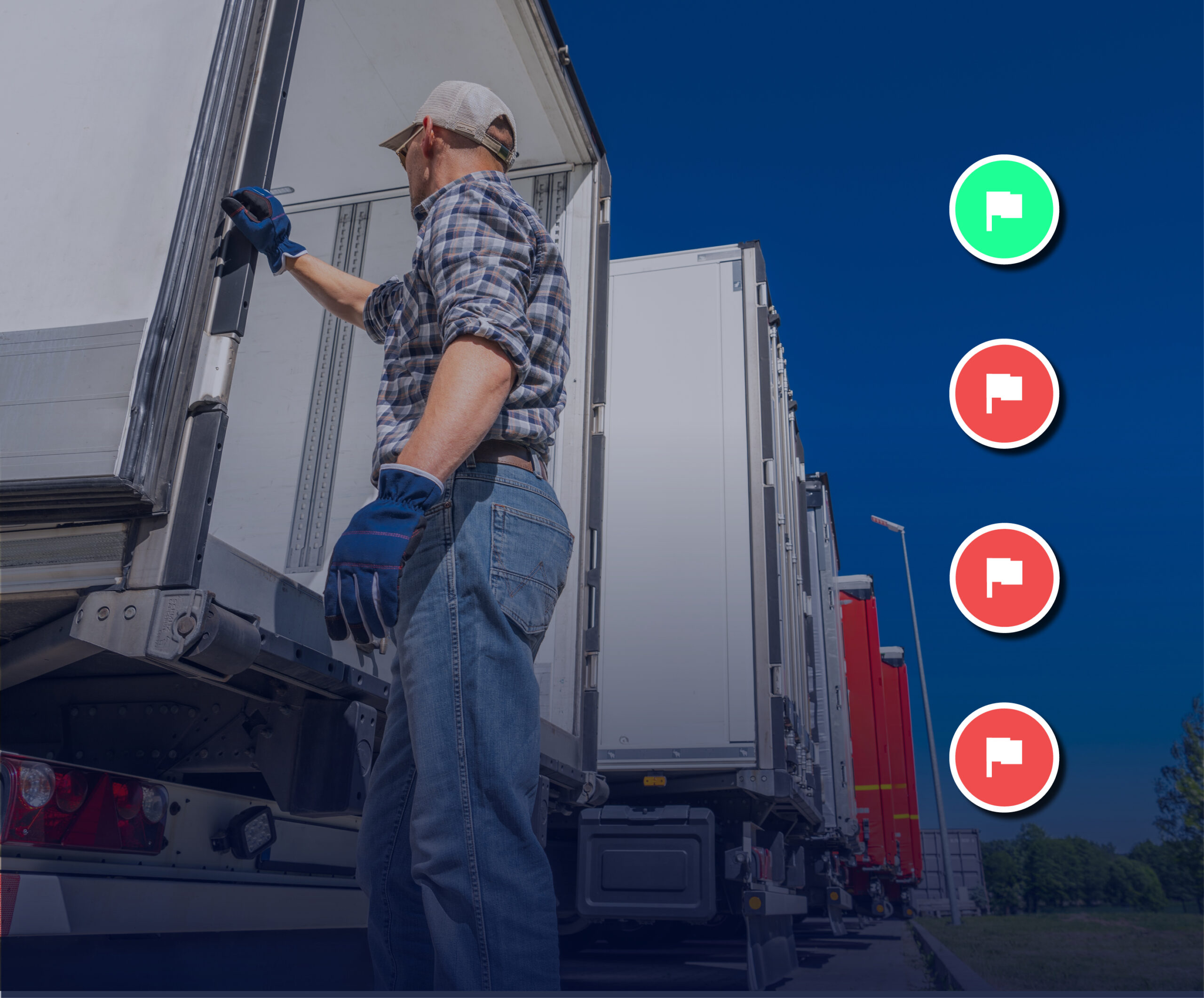
- Assume custody gaps happen: long dwell time, handoffs at cross-docks, and last-minute route changes are where problems start to stack.
- Plan for compromise, not just delay: hardware that arrives late is inconvenient; hardware that arrives damaged or tampered with can create downstream security and reliability issues.
- Encrypt and lock down hardware like it will be lost: full-disk encryption, secure boot, and strict key handling reduce the blast radius if a unit disappears.
- Do not confuse visibility with control: you need early risk signals and a workflow to act on them, not just a location update after the shipment is gone.
Assessing in-transit risk in context
Of course, it's important to recognize that not all AI hardware shipments carry the same level of risk, and the effectiveness of in-transit protection depends largely on the security measures already in place. If devices are shipped with drives wiped, strong full-disk encryption, and tamper-evident packaging, the likelihood of a data breach or malicious compromise is significantly reduced, though not eliminated.
In highly regulated industries or security-mature organizations, these controls may already be standard operating procedure. Conversely, shipments containing pre-configured devices, proprietary training data, or embedded credentials present a much greater risk if lost or tampered with.
Ultimately, the threat landscape is dynamic: attackers are drawn to high-value, high-profile shipments, and supply chain tactics are constantly evolving. Effective AI security means treating in-transit risk as a variable: one that must be assessed based on asset sensitivity, adversary motivation, and the maturity of operational controls.
How Overhaul protects AI hardware in transit
Overhaul offers a suite of tools and services designed to help security teams manage AI shipments and address the unique attack vectors and security gaps that arise during transit. With the increasing use of artificial intelligence (AI) in critical business processes, protecting AI systems and hardware has become essential to prevent data breaches and ensure operational resilience.
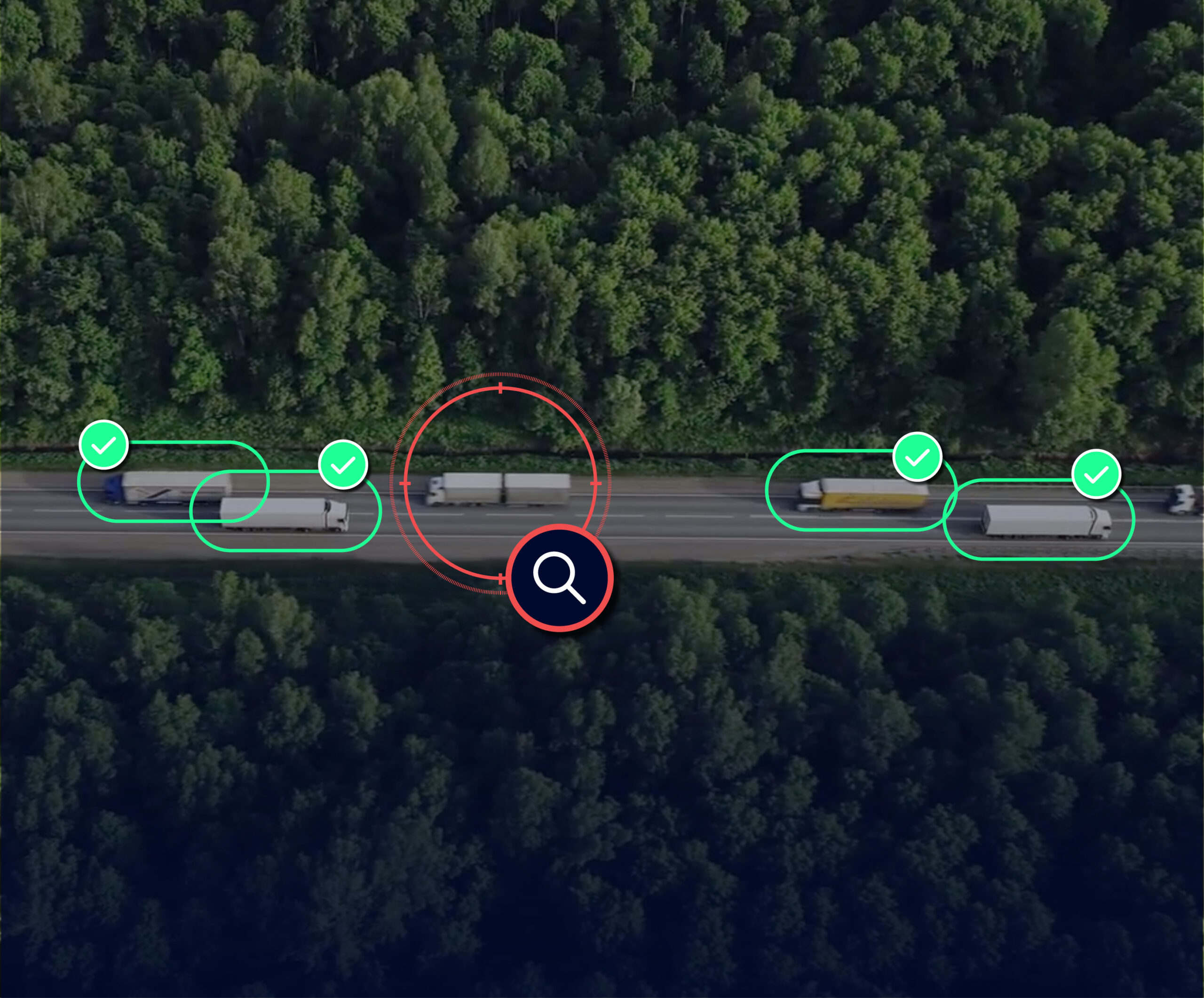
- Real-time shipment visibility & anomaly detection: Overhaul’s platform provides real-time visibility into the location, condition, and security status of in-transit AI hardware. Overhaul can continuously monitor shipments for indicators of risk, such as unscheduled stops, deviations from planned routes, or extended dwell times in high-risk areas. We also flag suspicious activity, enabling rapid incident response before a shipment is compromised.
- Tamper detection and chain-of-custody assurance: Overhaul immediately detects and escalates any break in the chain of custody, minimizing the window for adversarial attacks or physical theft. These controls are particularly critical for shipments carrying sensitive training datasets, proprietary model output, or specialized AI technologies.
- Integration with your existing tech stack: Overhaul’s solutions are built to seamlessly integrate with broader enterprise security controls and governance frameworks. Data from in-transit shipments can be correlated with digital security logs, creating a unified view that helps organizations continuously monitor for risks across both digital and physical domains. This holistic approach addresses not only the model and application layers of AI security, but also the physical movement and custody of hardware, closing security gaps that adversaries might otherwise exploit.
Tackling AI security risks
AI data security is not just a model problem, and it is not just a policy problem. It is an end-to-end risk problem including the data, systems, and physical assets that make both operational. As organizations adopt increasingly advanced AI technologies, the spectrum of attack surfaces and potential attack vectors continues to expand. Protecting AI systems and their underlying hardware requires coordination between IT, logistics, and security teams, as well as robust, AI-driven tools that continuously monitor for threats and orchestrate incident response.
Get the basics right: secure training data, put guardrails on generative interfaces, enforce access control, and audit continuously. Then address the part teams forget until it is too late: the in-transit leg. If your compute is moving, your risk is moving with it.
Overhaul helps protect those high-value shipments in transit by detecting risk early, flagging anomalies, and enabling faster coordination when a load goes off plan.
For enterprises managing AI at scale, the path forward is clear: integrate physical security with digital governance, close the security gaps between model development and hardware transit, and leverage artificial intelligence to keep pace with evolving threats. With Overhaul, protecting AI systems becomes an active process: one that, like AI itself, adapts, learns, and anticipates what's next.
Frequently asked questions
1. Why is in-transit risk often overlooked in AI data security?
Most organizations concentrate on digital controls such as encrypting data, hardening access, and monitoring logs. But hardware is physically moved between facilities, sometimes crossing borders and changing hands multiple times. Each transfer introduces risk: theft, tampering, or even substitution of hardware. Overlooking the physical leg means leaving the door open to attacks that digital controls alone can’t prevent.
2. What are the consequences if AI hardware is compromised during shipment?
It’s not just a matter of equipment loss. Stolen or tampered hardware can leak sensitive configuration files, credentials, logs, or proprietary training data. In some cases, adversaries may implant malware or exfiltrate intellectual property. The impact can cascade (from service downtime to regulatory penalties or reputational damage) if incidents go undetected.
3. How can organizations minimize in-transit risk?
Start by mapping the full journey: every handoff, route segment, and custody change. Treat each as a potential attack surface. Use tamper-evident seals, real-time shipment tracking, and anomaly detection to identify and escalate suspicious events. Most importantly, make sure your incident response plans extend beyond the data center and covers what happens if a shipment goes off plan or a custody gap appears.
4. Does in-transit security add significant operational complexity?
Not if it’s integrated into your existing risk and logistics workflows. Modern platforms like Overhaul automate visibility, alerts, and playbooks, reducing manual overhead. The goal isn’t to add friction, but to close gaps before attackers can exploit them, and to provide a unified view of both digital and physical security.
5. Is this level of protection only for hyperscalers or the largest AI teams?
No. Any organization deploying AI systems at scale or moving high-value compute, specialized accelerators, or sensitive training datasets faces similar in-transit risks. The sophistication of attacks is rising, but so is the value of the assets in motion. Whether you are a global enterprise or a team rolling out edge AI for the first time, the fundamentals apply: visibility, custody assurance, and a plan for when things go wrong.
6. How does physical shipment risk connect to compliance and regulatory frameworks?
Regulatory bodies increasingly expect organizations to demonstrate not just digital controls, but also physical safeguards for data and critical IT assets. Frameworks like the NIST AI Risk Management Framework and new AI-centric regulations emphasize supply chain integrity, chain-of-custody documentation, and incident traceability. Closing the in-transit gap helps prove compliance and reduces exposure in audits or investigations.
7. What happens if something goes wrong during a shipment?
The difference between a minor incident and a major breach is often speed and coordination. With automated playbooks, real-time escalation, and clear chain-of-custody data, organizations can react quickly to secure remaining assets, alert stakeholders, and begin forensic analysis. Delayed response or incomplete records can turn a recoverable event into a systemic failure.
8. What’s the biggest misconception about AI data security and logistics?
The most common mistake is thinking that once data is encrypted and models are locked down, the job is done. In reality, the attack surface shifts as assets move. The physical world is a path for adversaries, and the logistics leg is where many organizations are least prepared. Treating in-transit security as a first-class part of your AI security posture is no longer optional.